How Adventure Tourism Is Empowering Local Communities in Nepal
Adventure tourism in Nepal has changed from a small hobby for climbers into a major economic force that contributes around 7% in Nepal's total Gross Domestic Product (GDP). Nepal is known not only by Mt. Everest but also as the best geography for adventure travel - including trekking, trail running, and community-led journeys. And building better lives for people in remote Himalayan villages. This report examines the many ways adventure tourism creates jobs, protects traditions, and supports the physical and social development of rural communities across the country.
Overview of Adventure Tourism in Nepal
Adventure tourism in Nepal is no longer just about reaching a summit. It now includes a wide range of activities like trekking, trail running, mountain biking, and cultural walking tours. These activities act as economic lifelines for regions in steep and rocky terrain. In places like the Annapurna Sanctuary Trail (AST), the transition from traditional farming to tourism has provided a way for locals to earn a steady income.
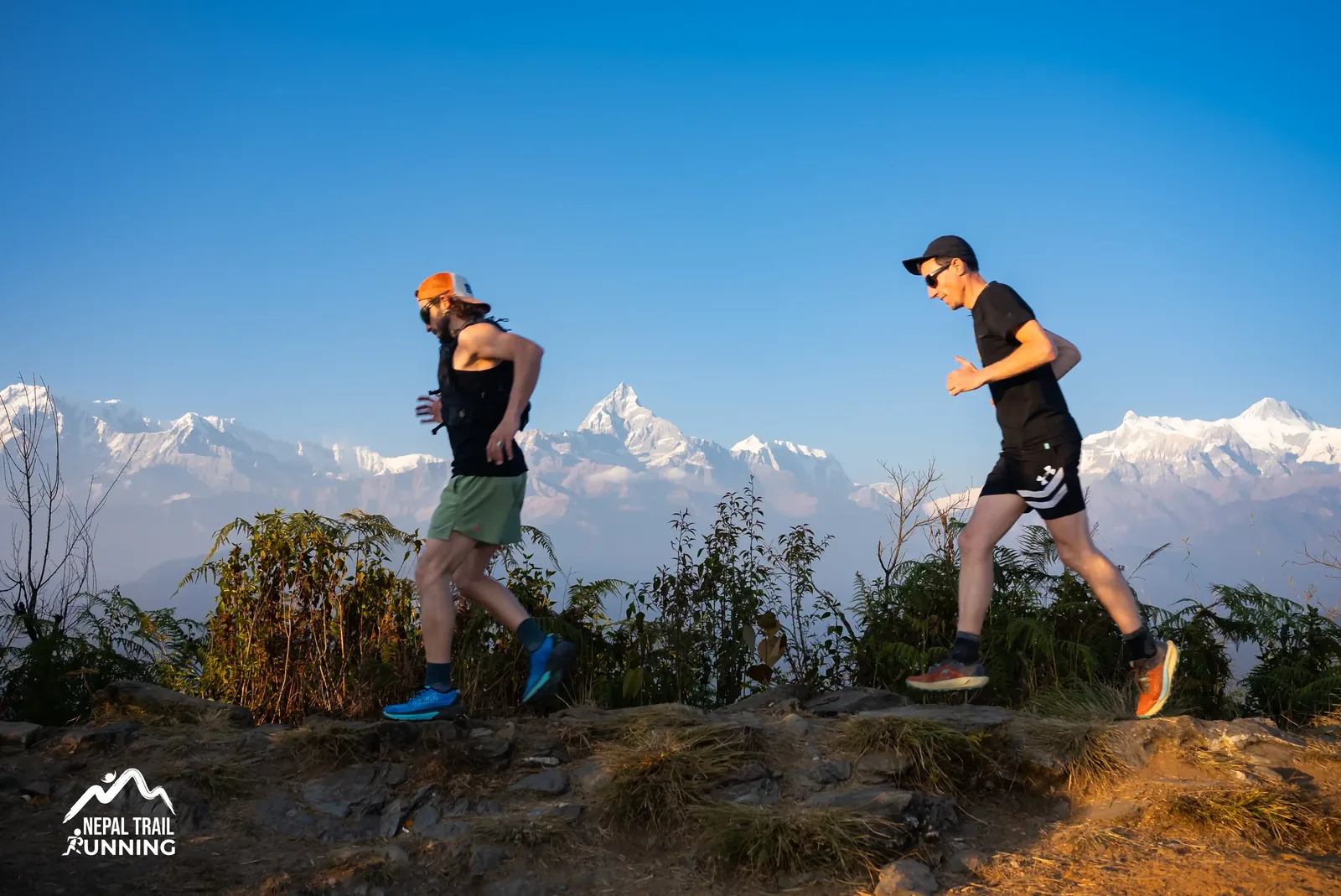
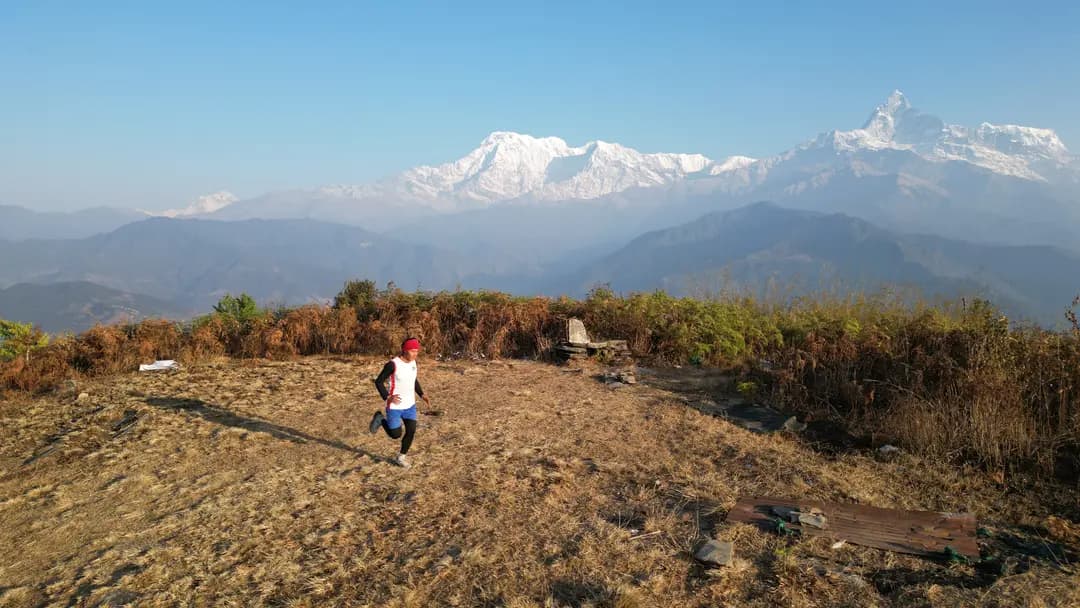
Photo: Foreginer running on the trail of Pokhara with Annapurna range in the backdrop.
Nepal rises from the lowest point, 60 m. in the madhesh of Kechana Kawal to the highest point in the world at Mt. Everest (8,848.68 m.). This drastic change in elevation creates different climate zones, topography, tropical forests to frozen glaciers. Such diversity attracts over a million visitors each year, with 60% of international tourists expressing interest in trekking and mountaineering.
Recently, trail running has become a popular way to explore these landscapes. Events like the Mustang Trail Race in Upper Mustang, Everest Trail Race in Everest region, Punchase Trail Race in Pokhara, and Jumla Rara Ultra Marathon in Western Nepal bring hundreds of runners into remote valleys, creating a new type of "sporting tourist" who spends money in the local economy.
| Type of Adventure Tourism | Geographic Focus | Key Community Participants |
| High-Altitude Trekking | Everest, Annapurna, Manaslu | Lodge owners, guides, porters |
| Trail Running Races | Mustang, Kathmandu Valley, Jumla Valley | Race directors, local athletes, support staff |
| Community Homestays | Panauti, Pokhara, Bardiya, Lamjung | Women hosts, local artisans, farmers |
| Remote Area Exploration | Kanchenjunga, Upper Dolpo, Makalu | Indigenous guides and Porter |
Economic Empowerment at the Grassroots Level
The most impactful aspect of adventure tourism is the creation of alternative jobs apart from farming. In the Humla district, only 1.7% of the land is suitable for agriculture. For families living in these conditions, tourism plays crucial roles in uplifting socio-economic conditions.
Direct Employment and Livelihoods
Tourism supports employment both directly and indirectly. In 2025, reports showed that the tourism industry provided approx 1.2 million jobs in Nepal. Direct roles include the men and women who work as trekking guides, tour guides, and porters. These workers are the backbone of the tourism industry. Porters, in particular, perform an incredible service by carrying loads up to 60 kg at altitudes over 5,000 meters.
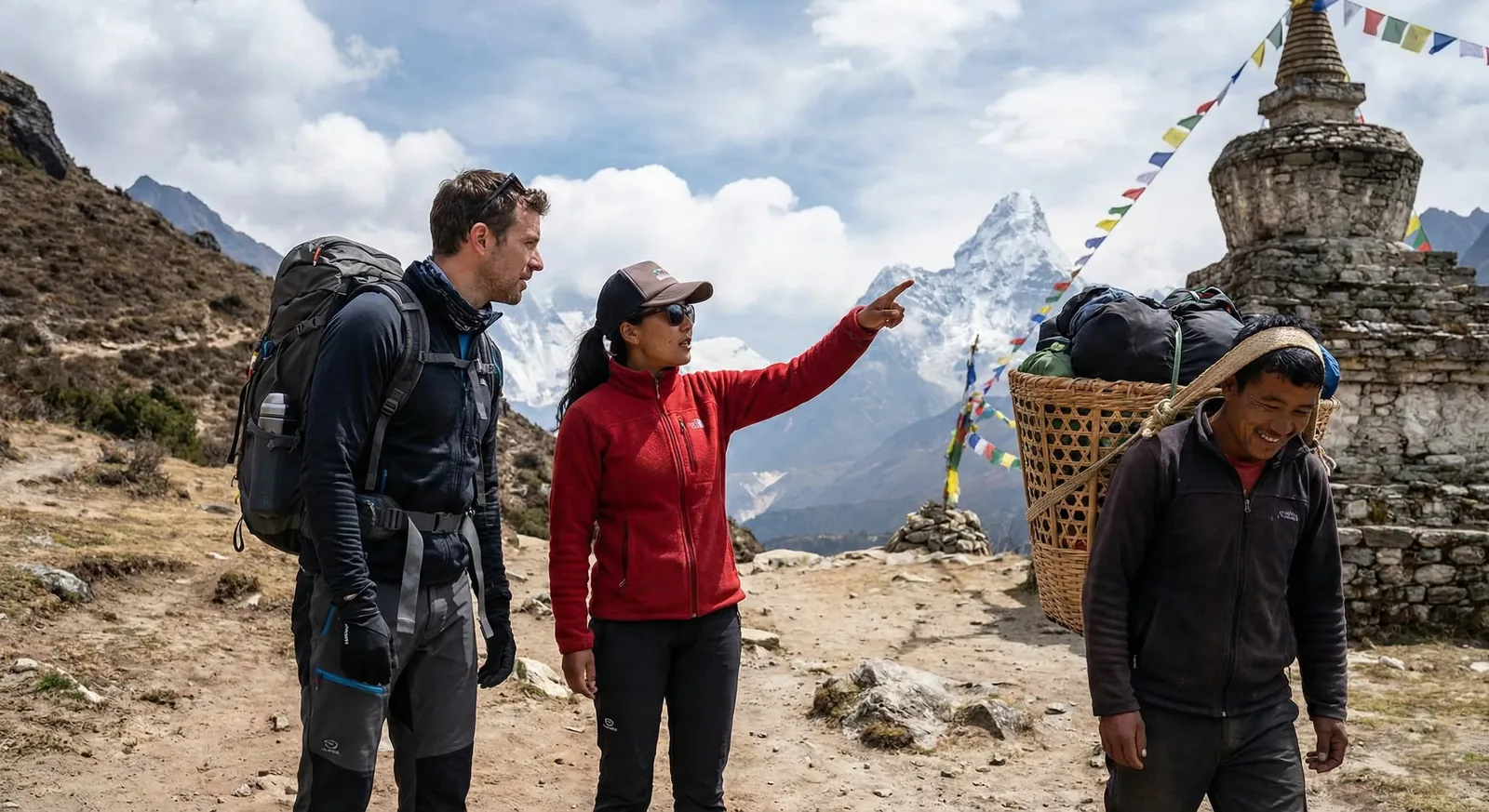
Photo: Women travel guide in Everest region.
In the Annapurna region, villages like Ghandruk and Dhampus have seen a massive shift in socio-economic status. Most inhabitants now run hotels, lodges, or teahouses. Research into these villages shows that tourism entrepreneurs earn significantly higher annual incomes than those rely on farming. This income allows them to invest in better housing and better education for their children.
The Multiplier Effect on Local Businesses
When a tourist stays in a village, the local economy thrives within a community. A lodge owner buys vegetables and eggs from a local farmer. A teahouse owner pays a local carpenter to fix a door. A visitor buys a handmade scarf from a local artisan. This is known as the multiplier effect. In Pokhara, tourism is responsible for 25% of all financial transactions in the city.
In Eastern Nepal, along the Makalu Arun Valley, social trekking groups prioritize hiring local porter-guides from the nearby communities. This ensures that the money spent by travelers stays in the valley rather than going to large international companies. This revenue supports the development of new small businesses and keeps traditional crafts alive.
| Category of Economic Support | Primary Benefit | Secondary Ripple Effect |
| Local Guiding | Direct salary for the guide | Money spent on children's university fees |
| Teahouse Services | Income from food and beds | Market for local farmers' crops |
| Handicraft Sales | Support for local artisans | Preservation of traditional weaving and carving |
| Animal Transport | Income for mule and yak owners | Support for traditional herding lifestyles |
Cultural Preservation and Community Pride
Adventure tourism does more than just bring money in Nepal. It helps preserve the unique cultures of the Himalayas. When travelers come to see the way of life of the Sherpa, Gurung, Tamang, and Newar people, it reminds the local communities that their traditions are valuable.
The Success of Community Homestays
The Community Homestay Network (CHN) is a leading example of how tourism can protect culture. This network started in 2012 with just one home in Panauti and has grown to include over 380 households in 50 communities. In a homestay, travelers live with a local family, eat traditional meals, and learn local customs. This creates a deep cultural exchange that is different from staying in a standard hotel.
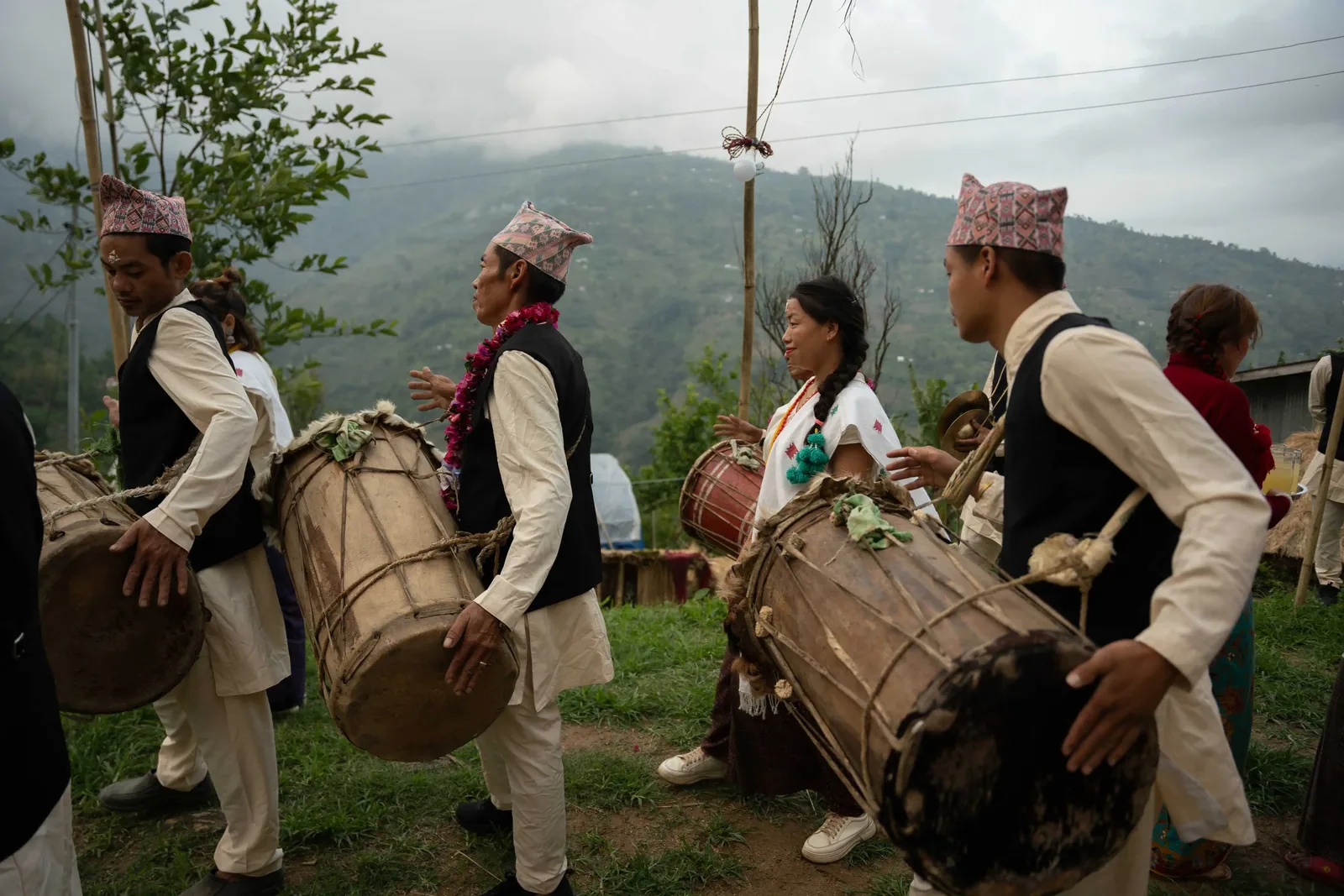
Photo: Aathpahariya Men playing Dhol for Dhol dance. (source)
In the Newari town of Panauti, hosts like Mina Koirala have found financial independence through the CHN. She shares her traditions with guests by teaching them how to make momos and serving traditional Suku Bwey (Sukul Bhoj in Nepali) feasts.
Because of this interest from tourists, these old recipes and customs are being passed down to the younger generation instead of being forgotten. In Eastern Nepal, the village of Sipting has opened several homestays where guests are welcomed with traditional music and ceremonies.
Pride in Indigenous Identity
In the Mustang region, tourism is closely tied to the ancient Tibetan culture of the "Kingdom of Lo." Visitors pay a Restricted Area Permit (RAP) Fee to enter Upper Mustang. Recent revision in RAP fee of $50 per day has added a new prospect to the region. This helps manage the number of tourists and supports the local administration. Adventure runners in the Mustang Trail Race are blessed by ancient Shija Jhong Cave, 15th-century monasteries, and Tibetan-Buddhist culture before they start their journey.
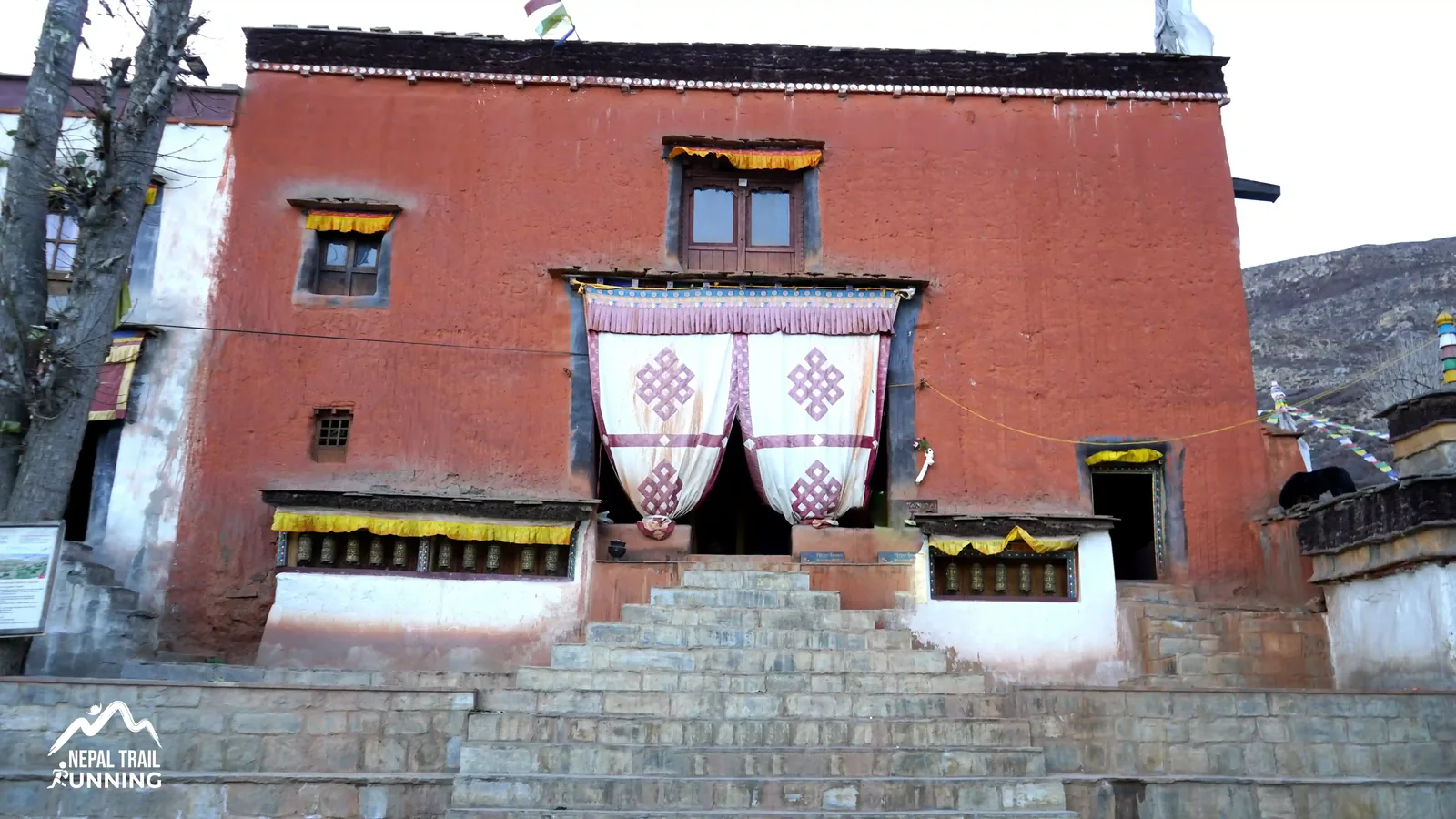
Photo: Ghar Gompa (Lo Gekar monastery) in Upper Mustang
In Ghandruk, the local Gurung people have built museums and preserved their traditional stone houses because they know visitors appreciate their heritage. This has turned the village into a cultural landmark, encouraging the youth to stay in their ancestral home rather than migrating to the city.
Social Empowerment and Personal Growth
Adventure tourism provides new opportunities for people who have traditionally been left out of the economy, including women, youth, and returning migrants.
Empowering Women Through Tourism and Sports
Women in rural Nepal are often limited to housework and farming. However, adventure tourism is changing this. Many of the most successful Homestays are run by women. In the Dhankuta region, women use the income from these homestays to send their daughters to university, creating a cycle of education and empowerment.
In the trail running diaspora, Mira Rai is the household name. A former guerrilla soldier during Maoist Insurgency, she discovered trail running and rose to the top of the international field. She now uses her success to run the Mira Rai Initiative (MRI), which provides scholarships and training for young women from marginalized backgrounds. Her efforts have inspired a whole generation of girls to see sports as a professional career path.
Creating Careers for Local Youth
The growth of trail running and specialized trekking has created high-skill jobs for local youth. Instead of just working as porters, young Nepalis are now training to be race course managers, logistics coordinators, and emergency rescue staff. In Jumla, the Karnali Club supports young runners who compete in the Jumla Rara Ultra Marathon, providing them with a platform to be discovered by international scouts.
For many young men who once thought they had to leave Nepal to find work in other countries, adventure tourism offers a new prospect to life. They use local knowledge of the mountains and natural fitness to lead successful careers at home. This helps keep families together and strengthens the social fabric of rural villages in Nepal.
Environmental Sustainability and Community Conservation
Responsible adventure tourism must protect the environment that makes Nepal famous. Local communities are often the best protectors of their own land.
Community-Led Conservation Efforts
In the Annapurna Conservation Area, locals are prohibited from cutting trees without permission, which has led to an increase in forest areas and greenery. Along the Annapurna Sanctuary Trail, tourism management committees and "Mother's Groups" organize regular trail cleaning events and manage waste disposal systems.
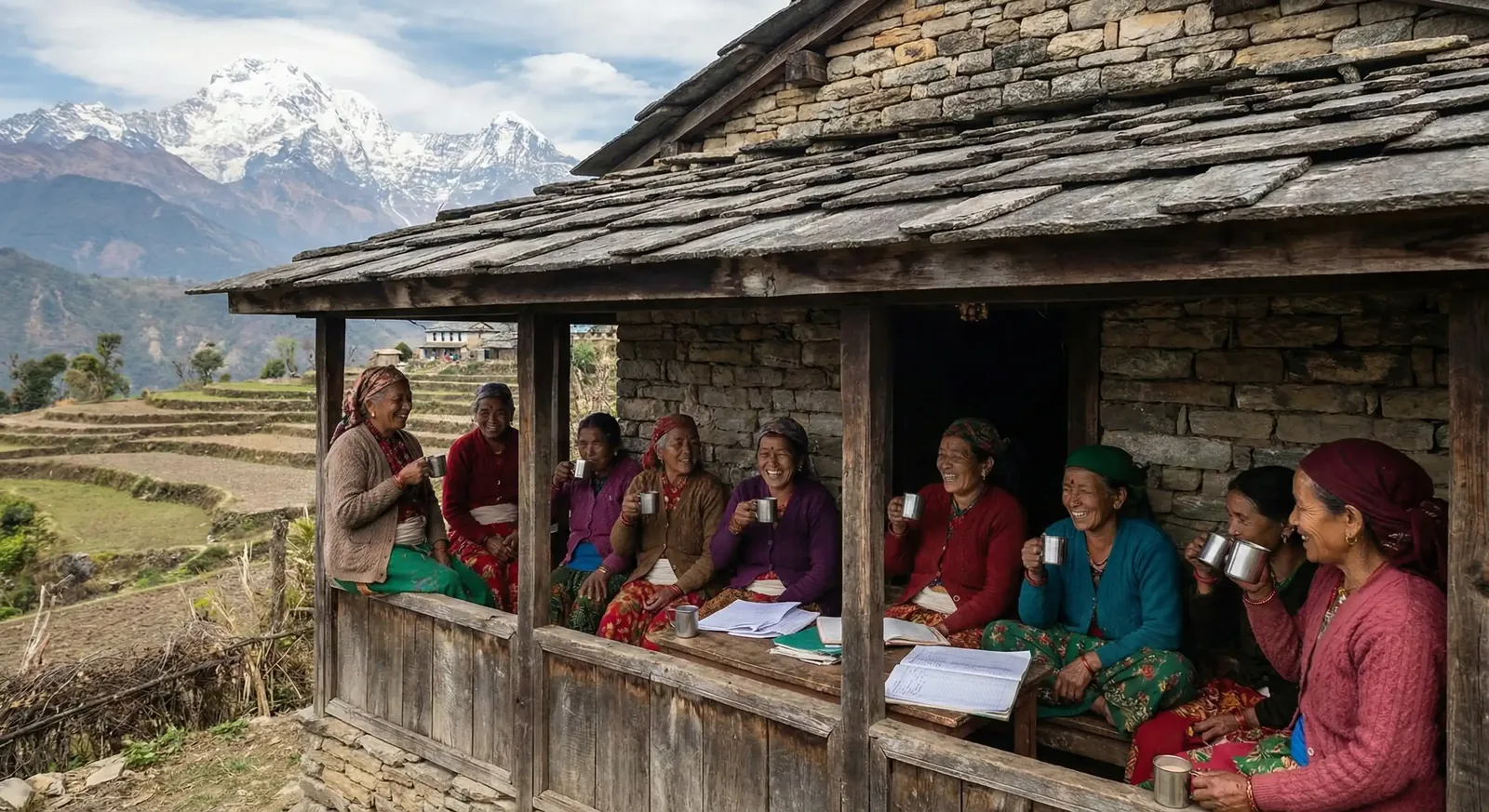
Photo: Mother's Groups in meeting discussing issues and solution of Annapurna region.
In Taplejung, the International Red Panda Trail Marathon is held to raise awareness about the endangered Red Panda. The race follows a 48 km route through red panda habitats, and the proceeds support community-based conservation programs. This shows that tourism can directly fund the protection of rare wildlife.
Promoting Clean Energy and Eco-Awareness
Many adventure operators now promote "Leave No Trace" principles, teaching both staff and tourists to minimize their impact on the land. In villages like Ghandruk, teahouses have shifted to using clean energy sources like solar power and LPG (cooking gas) instead of burning firewood. This reduces air pollution and protects the surrounding forests.
| Environmental Practice | Implementation Method | Community Benefit |
| Waste Management | Weekly sanitation programs | Clean and healthy living environment |
| Reforestation | Tree planting projects | Prevention of landslides and soil erosion |
| Wildlife Awareness | Red Panda Trail Marathon | Protection of endangered species |
| Clean Energy | Solar and micro-hydro projects | Reduced respiratory illness from wood smoke |
Infrastructure and Service Development
The revenue from tourism often leads to the development of better services that benefit everyone in the community.
Improving Physical Capital
Investments are made in infrastructure like the expansion of foot trails and the building of schools, health posts, and public toilets. In the Mustang region, new suspension bridges cross deep canyons. While these bridges are used by trekkers, their primary purpose is to help local villagers travel more quickly and safely between remote settlements.
Access to Health and Education
Tourism revenue helps fund community projects. For example, in many villages along the Annapurna Sanctuary Trail, families who earn money from tourism are able to invest more in their family's health and safety. This leads to a healthier and more resilient population.
| Infrastructure Item | Benefit for Tourists | Benefit for Local Community |
| Foot Trails | Safer trekking routes | Easier access to markets and schools |
| Micro-Hydro Plants | Electricity for charging devices | Lighting and power for local homes |
| Health Posts | Emergency medical care | Improved life expectancy and maternal health |
| Public Toilets | Better hygiene on the trail | Improved village sanitation and reduced disease |
Regional Spotlights: Impact Across the Himalayas
Adventure tourism affects different parts of Nepal in unique ways.
Central Nepal: The Annapurna and Langtang Hubs
The Annapurna region is the most popular trekking destination in the world. Here, the community-based ecotourism model is very advanced. Villages like Ghandruk are world-famous for their hospitality and Gurung culture.
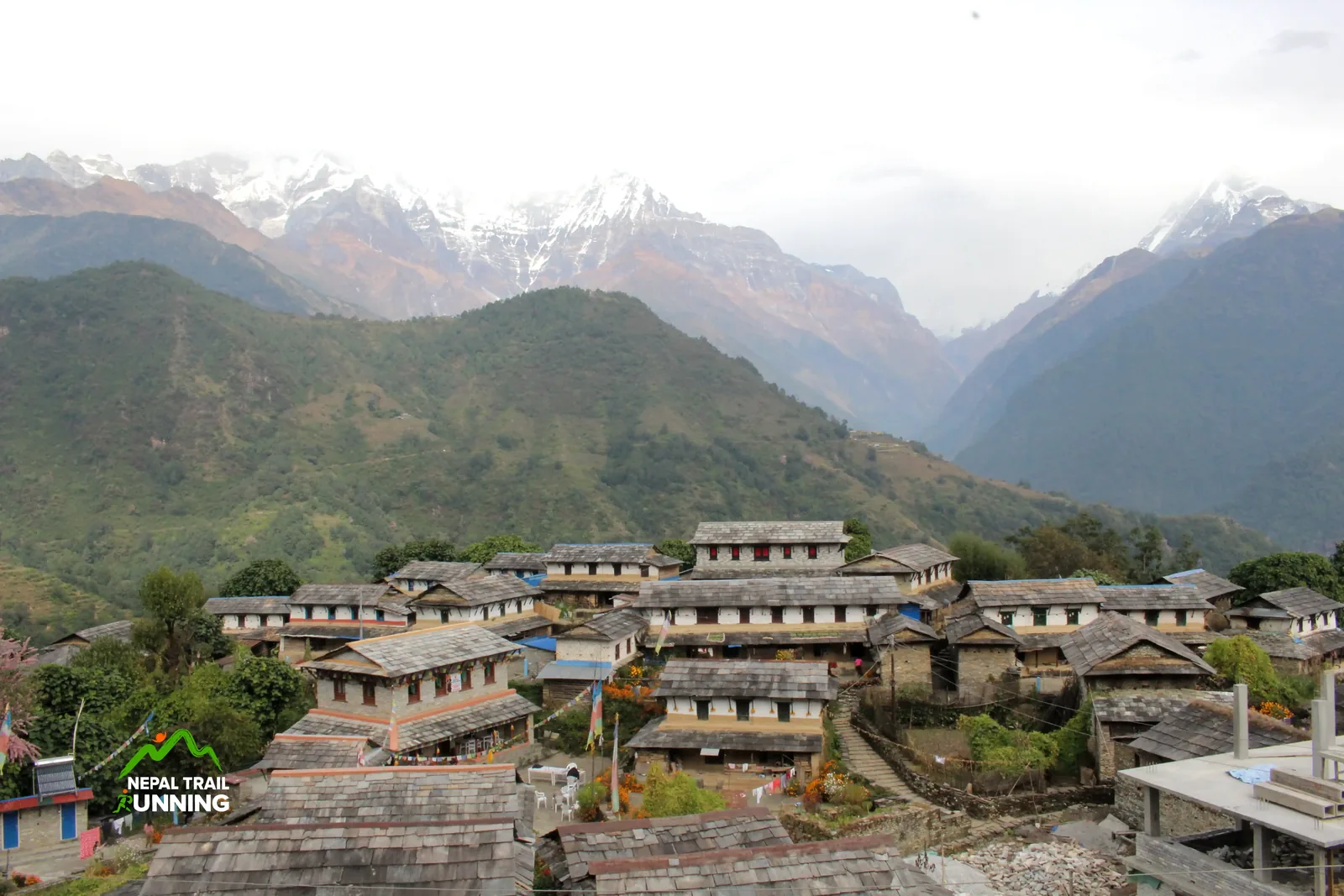
Photo: Ghandruk village annapurna region.
In the Langtang Valley, tourism is essential for the local economy, especially as the region continues to rebuild after the 2015 earthquake. Teahouses in Langtang offer a mix of traditional Nepali food and western meals, providing energy for the rigorous hiking required in this area.
Northern Nepal: The High Deserts of Mustang
Mustang offers a landscape that looks like a high-altitude desert. It was forbidden to tourists until 1992. Today, it is a hub for multi-stage trail races. The Mustang Trail Race covers 170 km over 8 stages at high altitudes. This brings international visitors who pay high permit fees that fund local development. The presence of tourists also supports local brands like Kaemp 8848, a Nepali-owned outdoor gear company that provides fair prices for local guides.
Eastern Nepal: Kanchenjunga and Makalu
The far eastern region is much less crowded than Everest or Annapurna. It offers an "authentic trail experience" away from the crowds. In Kanchenjunga, the tourism industry is still in its early stages, but it is the first region in Nepal to be managed directly by local communities. In the Makalu region, trekkers can visit Makalu Base Camp and experience the unique culture of the Rai and Sherpa people.
Western Nepal: The Remote Wilds of Humla and Jumla
Western Nepal is the most remote part of the country. Tourism here is still growing, but it represents the best chance for poverty reduction in an area with very few other jobs. Jumla has become a center for trail running excellence, producing some of the country's fastest athletes who train in the harsh, high-altitude terrain.
Why Responsible Adventure Travel Matters
Choosing how you travel is the most important decision a tourist can make. When you choose a local operator, you ensure that your money stays in Nepal.
The Role of Local Operators
Local companies like Trail Running Nepal are deep-rooted in the communities they visit. They hire local guides and porters, pay fair wages, and ensure that their staff has the proper insurance and equipment. This is different from some international companies that may keep most of the profit for themselves. By supporting local operators, you are directly contributing to the salaries of people who live in the mountains.
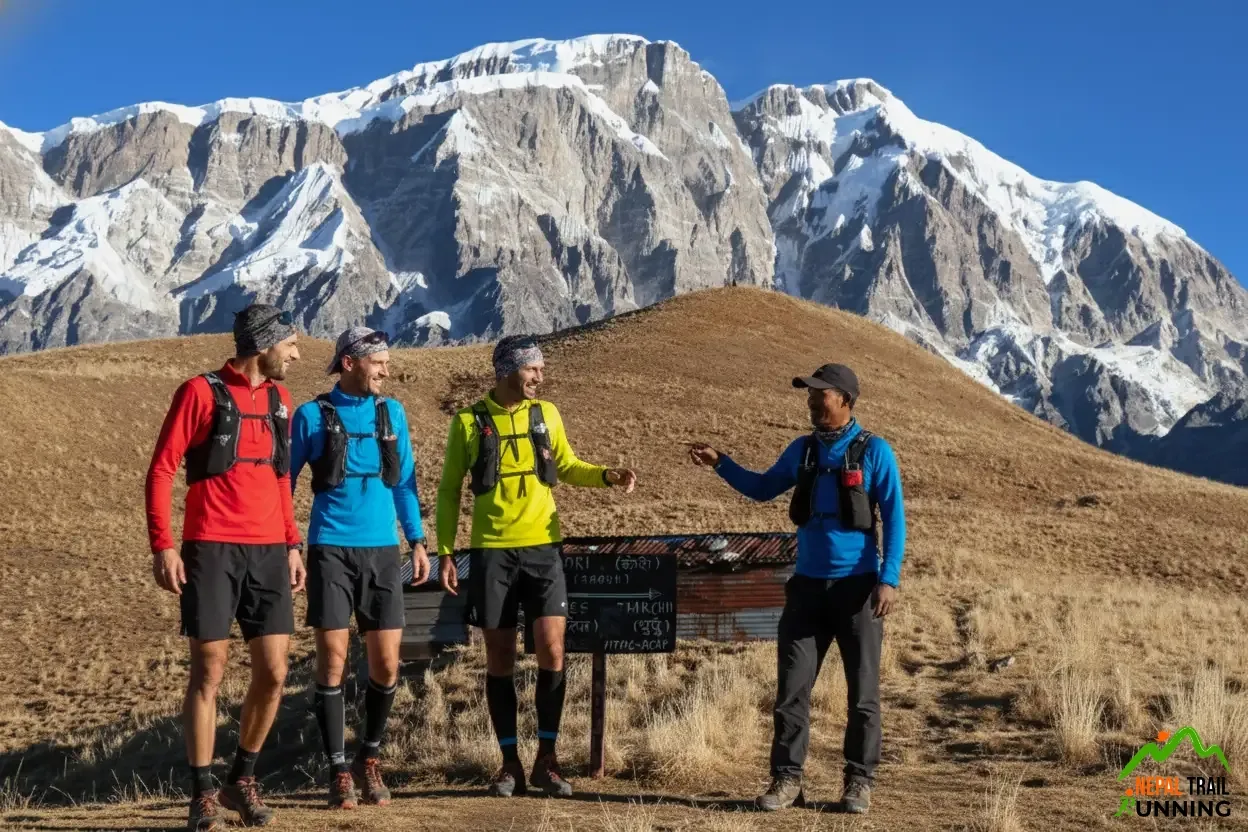
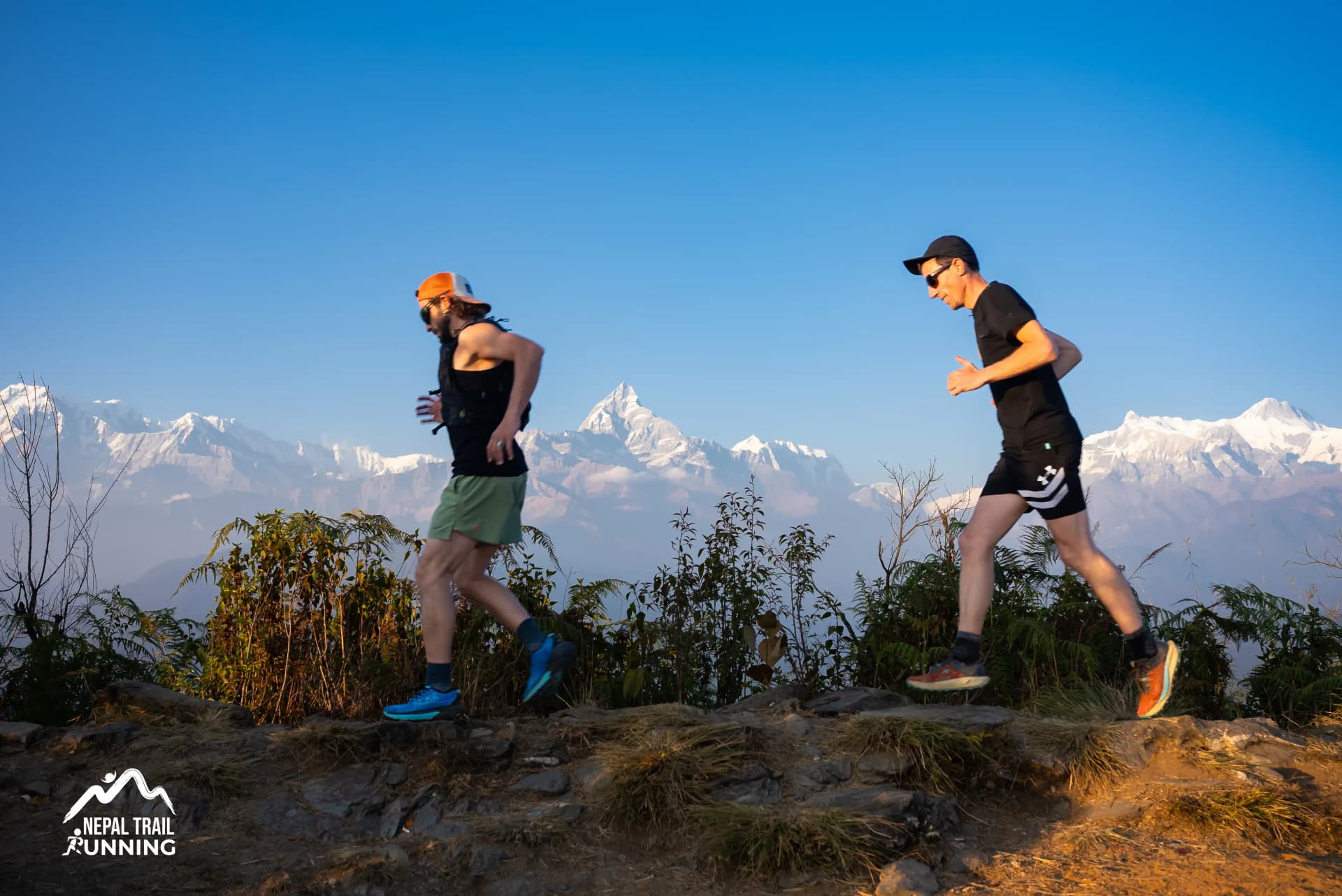
Photo: Trail running on Kapuche-Kori trail
Ethical Choices for Trekkers and Runners
Responsible travelers can help by:
- Staying in locally owned lodges and teahouses rather than large hotel chains.
- Buying food, drinks, and handicrafts from local shops to support small businesses.
- Hiring a local guide or porter to provide income for mountain families.
- Respecting local customs, such as asking before taking photos.
- Minimizing waste and avoiding single-use plastics to protect the fragile ecosystem.
Trail Running Nepal’s Role and Call to Action
At Trail Running Nepal, we believe that tourism should be a force for good. Our mission is to grow the sport of trail running while supporting the exceptional athletes and communities of Nepal. We organize world-class races like the Annapurna Circuit Trail Running and the Manaslu Annapurna Circuit Trail Running, which target remote geography and expose to new challenges.
We also work to crowdsource support for local runners. This includes helping girls & boys train for races and assisting talented athletes from remote places of Annapurna region. We assist them in travelling and compete internationally. When you run with us, you are not just crossing a finish line; you are helping to build a sustainable future for the Himalayas.
Want to be a Change Maker?
Join us for an unforgettable adventure that uplifts local communities. Whether you are a beginner looking for a scenic trek or an experienced trail runner seeking an ultra-marathon, we have all kinds of trails for you. Travel responsibly, run with purpose, and experience the heart of Nepal.