How to Train for High-Altitude Trail Running: An 8-Week Plan from Nepal's Guides
Our guides hear the same question at the end of almost every camp: what should I have done differently before I came? The honest answer is rarely run more. It is usually run differently. This is the plan we now send to every runner who books a camp with us.
It assumes two things. You can already run comfortably for two hours on trails, and you have roughly eight weeks before departure. Eight weeks is not generous, but it is enough. If you are reading this with a September or October camp booked, it is exactly the window you have.
If two hours on trails is not comfortable yet, do not close this page. Plenty of people arrive at our camps having never run a trail race, and they finish strong. Skip ahead to new to trail running for the version of this plan built for you.
One honest note first. Most of our runners live at sea level, in places with no mountains within driving distance. This plan is written for them. If you already live in Chamonix or Boulder, you know most of this, and your acclimatization in Nepal will be easier than you expect.
What altitude actually does to your running
Above roughly 2,500 meters, the air holds the same percentage of oxygen, but at lower pressure, so every breath delivers less of it to your blood. Your pace slows at a given effort. Recovery between climbs takes longer. Sleep gets lighter. None of this can be fully trained away at sea level.
That is why our itineraries climb gradually, and why this plan spends as much time on durability as on speed. What you can train at home is everything else: legs that absorb a thousand meters of descent without seizing, the ability to run the day after a hard day, and the patience to go slow.
The 8-week high-altitude plan at a glance
Here is the shape of the eight weeks before you read the details. Each block builds on the one before it, so resist the urge to jump straight to the big weekends.
Week | Focus | Running Days | Key Weekday Session | Weekend |
| 1–2 | Build the frame | 4–5, easy but one | 40–50 min hill repeats | One longer trail run |
| 3–4 | Teach legs to repeat | 4–5 | Hill repeats | 3 hrs Sat + 2 hrs Sun, or one day fast hiking with a pack |
| 5–6 | Peak block | 5 | Hill repeats + fuelling practice | Back-to-back, longest day 4–5 hrs, full kit rehearsal |
| 7 | Absorb | Volume −50% | 2 short hill sessions | One easy long run |
| 8 | Arrive fresh | Volume −65% | 2 short hill sessions | Rest, travel, land rested |
Print it, screenshot it, stick it on the fridge. The detail below explains why each block matters, but the table is the plan.
Weeks 1 and 2: build the frame
Run four to five times a week, all of it easy except one session. That session is hills. Find the longest climb near you and repeat it for 40 to 50 minutes. Run up at an effort where you can still speak in short sentences, then walk or jog back down.
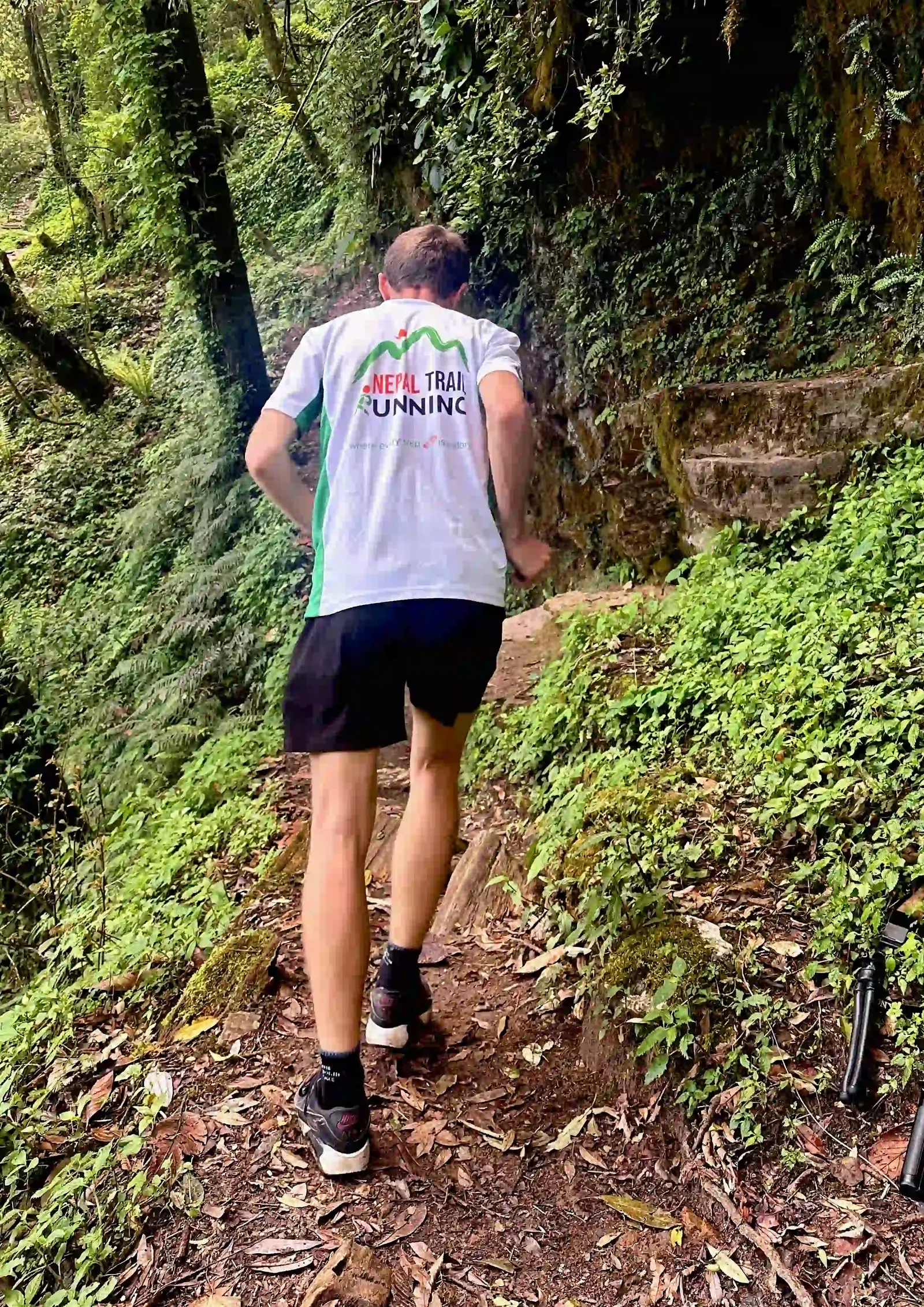
No hills nearby? A stair machine or a multi-storey car park does the job. It is dull and repetitive, and it works anyway. Then add two short strength sessions a week: step-ups onto a box, single-leg squats, calf raises, and core work.
The goal of the strength work is not gym numbers. It is knees and ankles that still track straight on hour six of a long descent. That single quality, more than any speed session, decides whether you finish a camp comfortable or wrecked.
Weeks 3 and 4: teach your legs to repeat
This is the block most road runners skip, and the one that matters most for a multi-day camp. On the weekend, run long on both days. Not two heroic efforts: something like three hours on Saturday and two on Sunday, on trails, with real climbing in both.
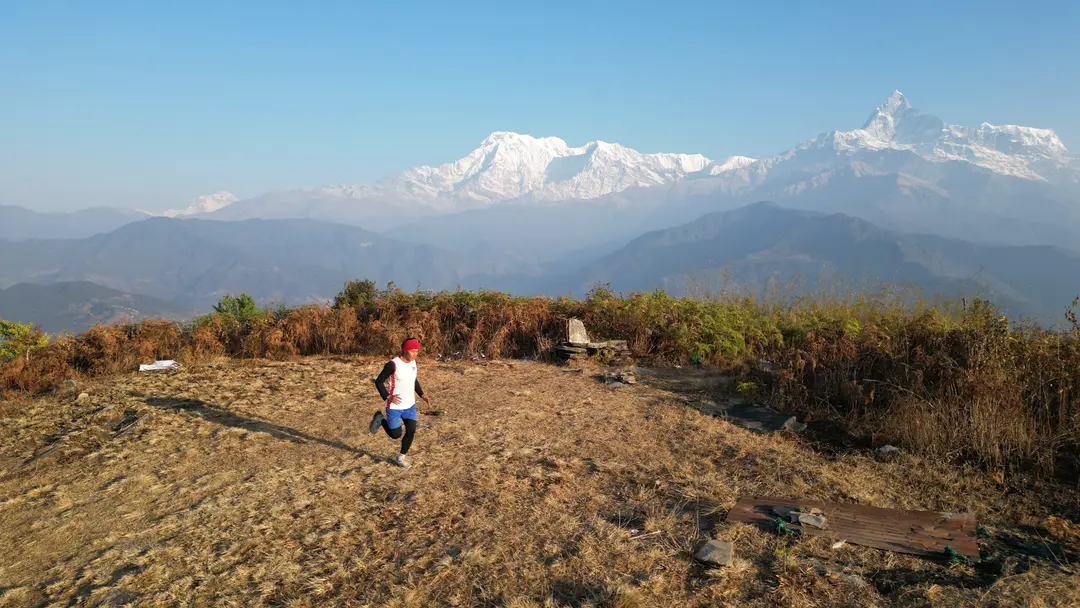
The Sunday run is the important one. It teaches your legs to perform tired, which is the defining skill of stage running. Keep the weekday hill session through this block. If you can reach any real elevation, even 1,500 meters, spend one weekend day hiking fast with a loaded pack instead of running.
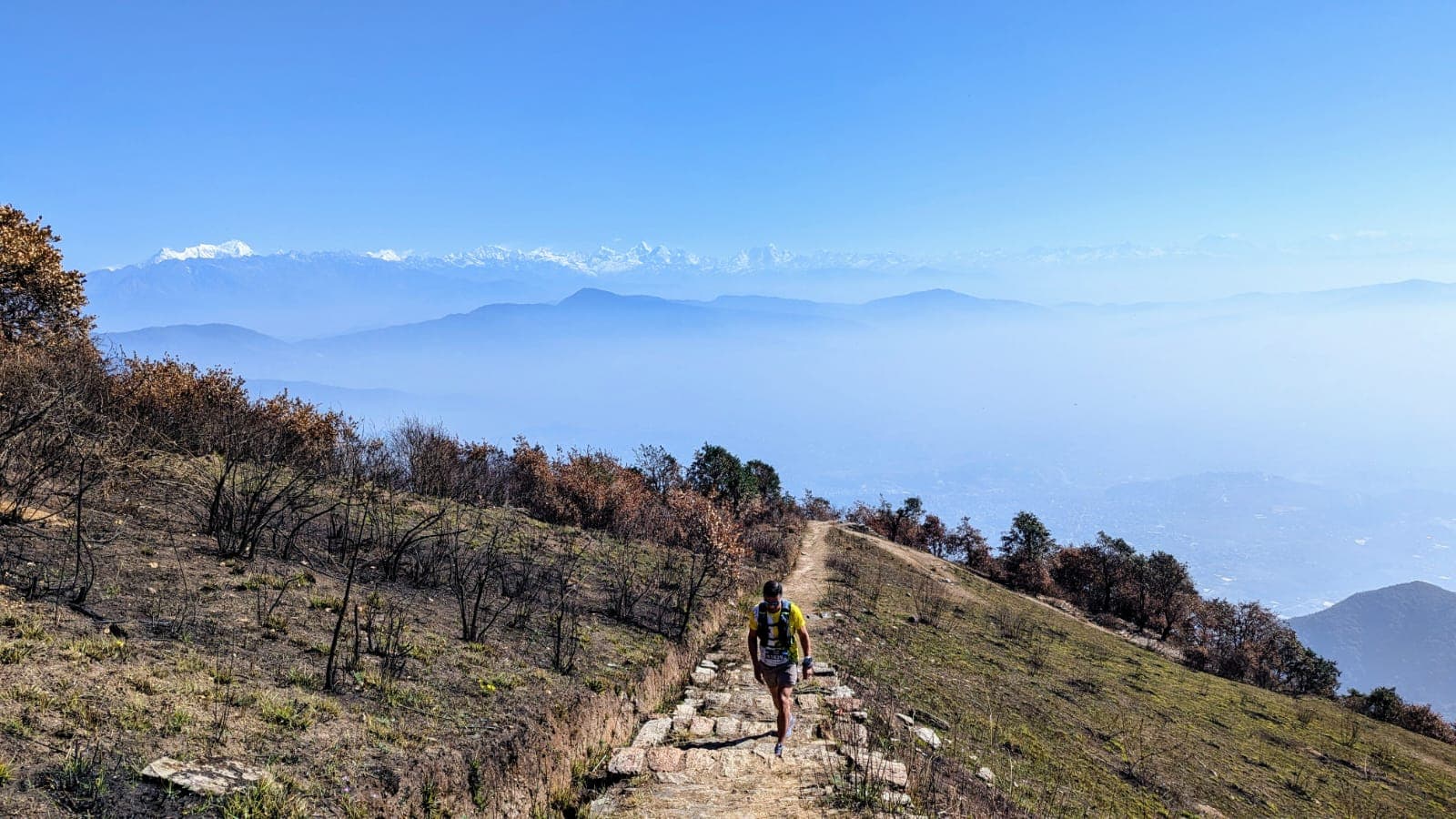
Fast uphill hiking is not a compromise on a Himalayan camp. It is the technique. Our lead guides, Jiban and Milan, hike most climbs above 4,000 meters, and both are professional mountain runners. If they walk the steep sections, so will you, and you may as well train for it now.
Weeks 5 and 6: the peak block
This is your biggest fortnight. Aim for two back-to-back weekends, with the longest single day stretching toward four or five hours. Practice everything you will actually do in Nepal. Eat every 45 minutes. Use poles if you plan to carry them. Wear the exact pack and shoes you will fly with.
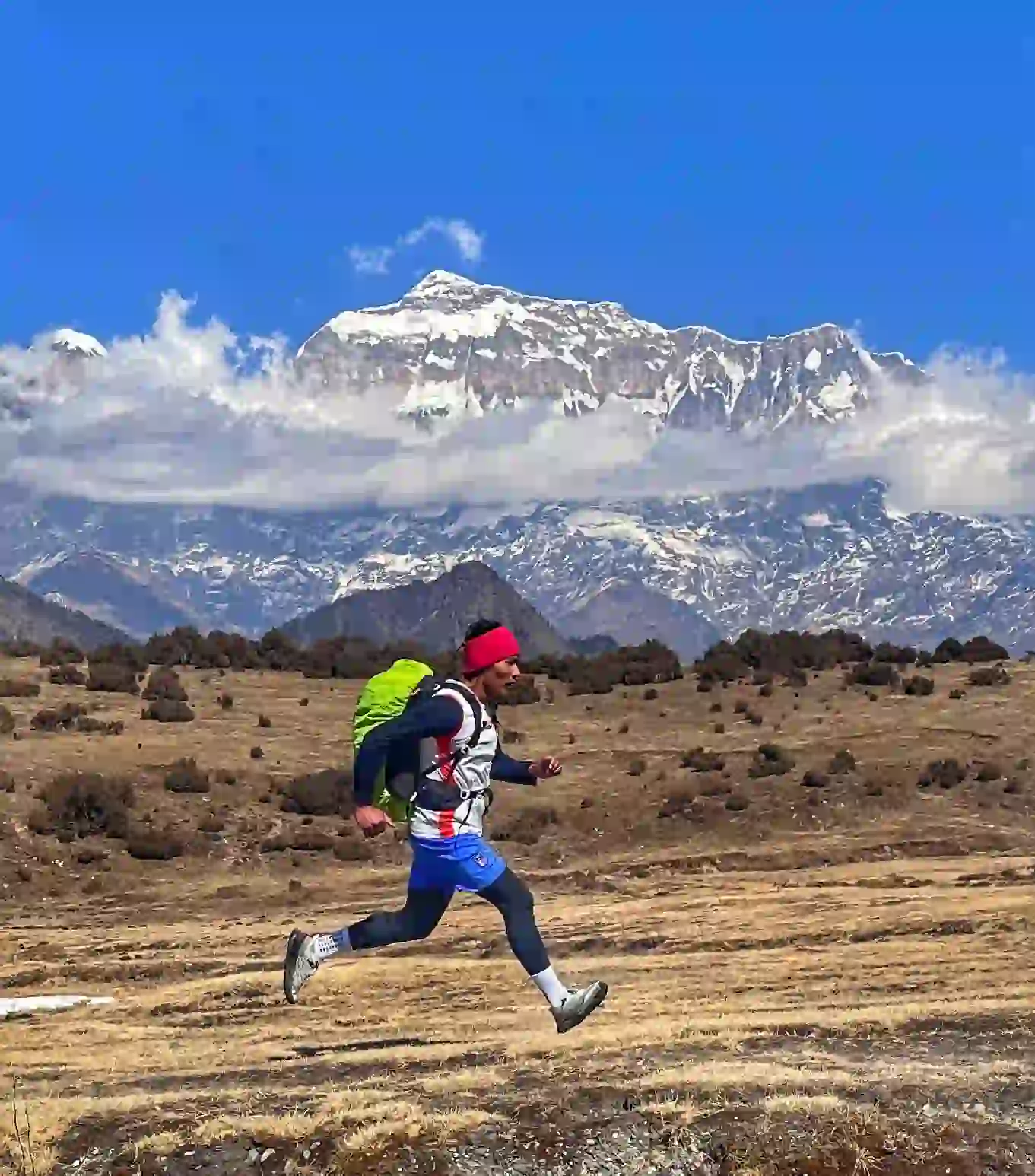
A camp is a bad place to discover that your pack chafes or your new shoes blister. If you can reach altitude at all during these weeks, take it. A weekend at 2,500 to 3,000 meters teaches you what the first ache of thin air feels like, and that recognition is worth more than any lab protocol.
The live high, train low method that elite programs love is genuinely effective, but it is irrelevant if you live in London or Singapore. Do not lose sleep over what you cannot access. Consistent back-to-back long runs at sea level will carry you further than most runners believe.
Weeks 7 and 8: taper, then arrive fresh
Cut your volume by roughly half in week 7, then by two-thirds in week 8. Keep two short hill sessions so your legs stay sharp. You cannot gain real fitness in the final ten days. You can absolutely lose your camp to a training injury born of last-minute panic.
So arrive slightly undertrained and fully rested. That runner beats the exhausted hero every single time, and it is not close. The taper feels wrong while you are doing it, because doing less always does. Trust it anyway. Your legs will thank you on day one at 3,500 meters.
How hard to train depends on which camp you booked
Not every camp asks the same thing of you. A week in the Annapurna foothills and a high crossing in Manaslu are different animals, and your training should reflect that.
Camp Type | Max Altitude | What to emphasise in the plan |
| Pokhara day runs & foothills | Below 3,000 m | Back-to-back weekends and descent durability. Altitude is not the limiter here. |
| Annapurna region camps | 3,000–4,000 m | Full plan as written. Add the altitude weekend in weeks 5–6 if you can reach one. |
| Manaslu region camps | Above 4,000 m | Fast hiking with a loaded pack becomes your priority session, not an optional extra. |
| Everest region camps | Above 5,000 m | Full plan, plus an honest conversation with us about pacing before you book. |
Not sure which bracket you are in? Send us your dates, and we will tell you straight.
Altitude tactics our guides actually use
Once you land in Nepal, training stops and behavior takes over. Drink more water than feels necessary, because mountain air pulls moisture out of you with every breath. Run the first days slower than your ego wants. A conversational pace at 3,500 meters is already a genuine workout.
Skip alcohol until you are past the high point of your route. And say something the moment a headache appears, not three hours later. Altitude problems caught early are inconveniences. Caught late, they end trips. Our guides watch everyone closely for the signs, but they cannot read your mind.
None of this is complicated. It is just easy to forget when you are tired and excited at the same time. For a deeper look at acclimatization and the early warning signs to watch for, read our altitude tips page before you fly.
New to trail running? Start here instead
If two hours of trail running is not comfortable yet, the eight-week plan above will bury you. Give yourself twelve to sixteen weeks instead, and build differently. What matters at this stage is time on your feet, not pace.
Walk-run everything. Ten minutes running, three minutes walking, repeat. This is not a beginner compromise. It is exactly what every guide in Nepal does above 4,000 meters, and it is how most of our runners cover the biggest days on any camp.
Prioritise hiking with a pack over running speed. One long hiking day a week, ideally on hills, with the pack you plan to bring. It is the single most transferable thing you can do, and it builds the ankles and calves that trail running punishes.
Get comfortable descending. Downhill is where new trail runners get hurt, and where the fatigue accumulates on a multi-day camp. Practice it on tired legs, slowly, well before you practice it fast.
Build toward one long day. If you can walk-run for four hours in hilly terrain and feel reasonably fine the next morning, you are ready for our foothills camps. That is the benchmark, and it is more achievable than it sounds.
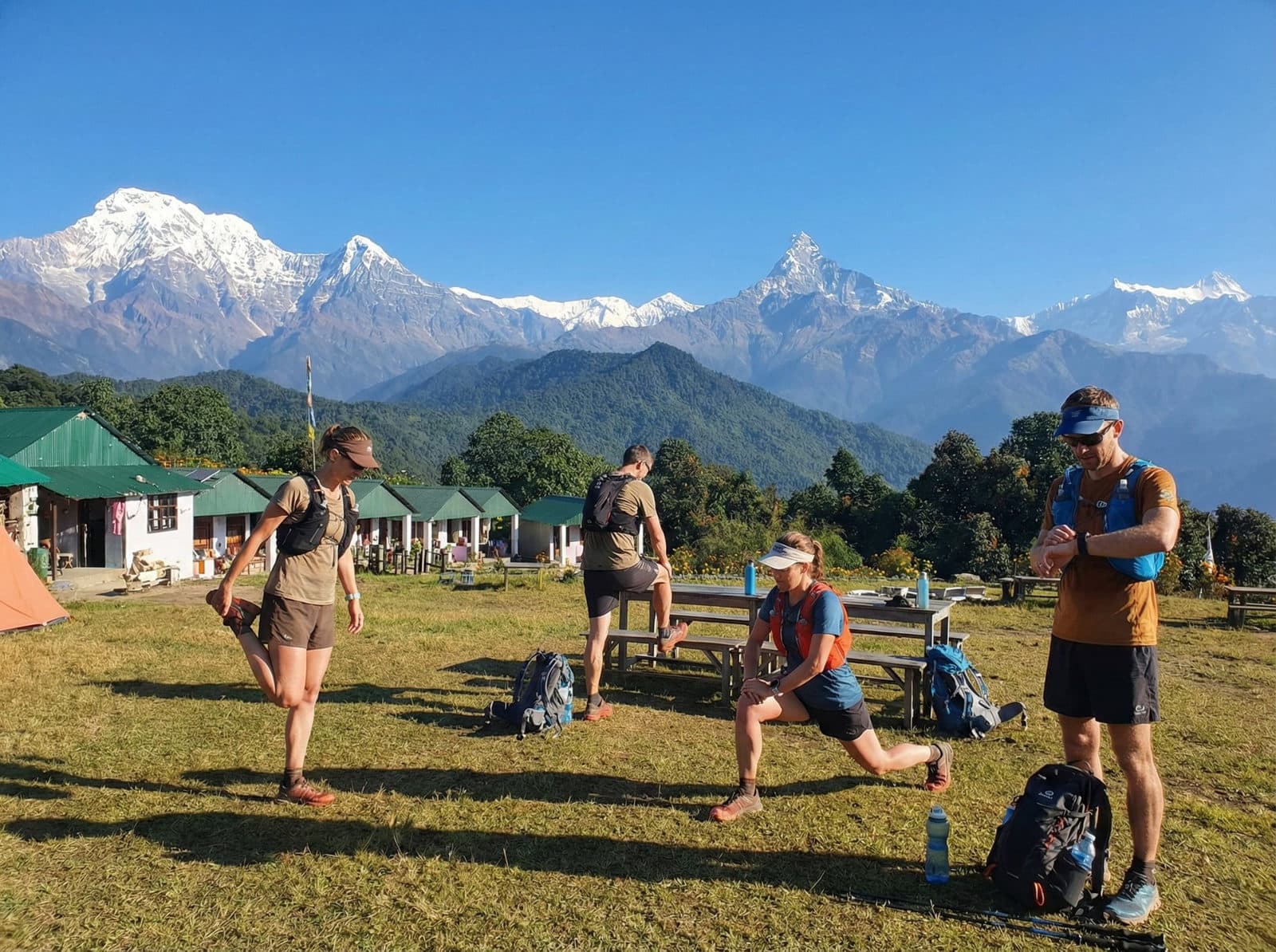
Our Pokhara day runs and Annapurna foothills camps are built for runners at exactly this stage. Lower altitude, forgiving terrain, and a group pace that does not leave anyone behind. Nobody on those camps is racing.
FAQ
1. How many weeks do you need to train for a high-altitude trail running trip?
Eight weeks is enough if you can already run comfortably for two hours on trails. That gives you time to build climbing strength, add back-to-back long runs, then taper. Twelve to sixteen weeks is more realistic if you are newer to trail running or coming back from injury.
2. What if I only have four weeks before my camp?
Run weeks 3 to 4 and 5 to 6 of this plan, then take one taper week. You will lose some base, but the back-to-back weekends are the part you cannot skip. Tell us your timeline, and we will factor it into your day-one pacing.
3. How long does it take to acclimatize to high altitude?
Most people need two to three days at moderate altitude, between 2,500 and 3,500 meters, before the body starts adjusting, and about a week to function comfortably. This is exactly why good multi-day itineraries in Nepal climb gradually instead of heading straight up to the high passes.
4. How do you prepare for altitude sickness?
You cannot fully prevent altitude sickness, but you can lower the risk. Ascend gradually, stay well hydrated, avoid alcohol, and never ignore an early headache. Some travelers discuss acetazolamide with their doctor before the trip. Whatever you do, report symptoms to your guide the moment they appear.
5. Can you train for altitude at sea level?
Yes, you can train everything except the altitude itself: climbing strength, descending durability, and back-to-back endurance. That preparation largely determines how much you enjoy the trip. The thin air still gets a vote, of course, which is what the acclimatization days built into your itinerary are for.
6. Is hiking good training for a trail running camp?
Yes. Fast uphill hiking with a loaded pack is one of the most specific workouts you can do for the Himalaya. Above 4,000 meters, nearly everyone hikes the steep climbs, including professional mountain runners. Training that movement now means it will feel normal, not like a defeat, on the trail.
7. Do I need trekking poles?
Not required, but most runners on our higher camps end up glad they brought them. If you plan to use poles, practice with them during weeks 5 and 6. Poles are a skill, not just a piece of equipment, and the first descent of a camp is a poor place to learn.
8. Can a complete beginner join a trail running camp in Nepal?
Yes, on the right camp. Our foothills and Pokhara day-run programs are designed for runners who are still building. What we need is honesty about your current shape when you enquire, so we can put you on a route that suits you rather than one that punishes you.
Thinking about putting this plan to use? Our camps run year-round across the Manaslu, Annapurna, Langtang and Everest regions. Autumn and spring for the classic high routes, winter and monsoon for the foothills. If you are still choosing when to come, our weather and season guide explains what each season actually offers.
Tell us your dates, and we will tell you honestly which camp fits your current shape, and which one you should train a little harder for. If we think you need another season of building first, we will say that too. No hard sell, just a straight answer from people who run these trails every season.