Join group (2-12 Pax) · 6 Nights 7 Days
Want to run this trail with your own group?
Private trip available for 1 to 16 persons.
Available all year — choose your own dates.
5 Nights 6 Days · USD 620
8 Nights 9 Days · USD 1350
8 Nights 9 Days · USD 1000
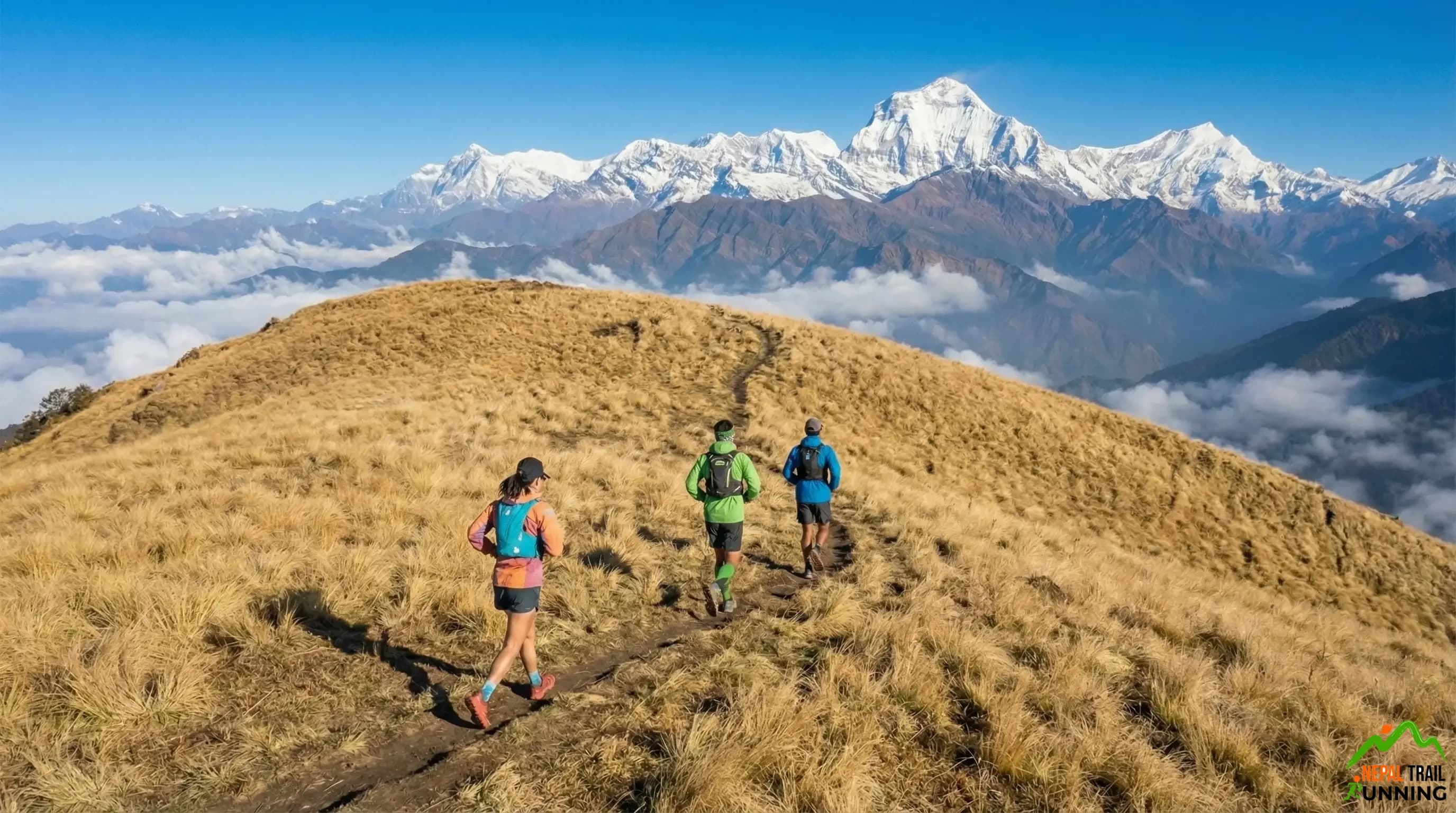
13 Nights 14 Days · USD 1300
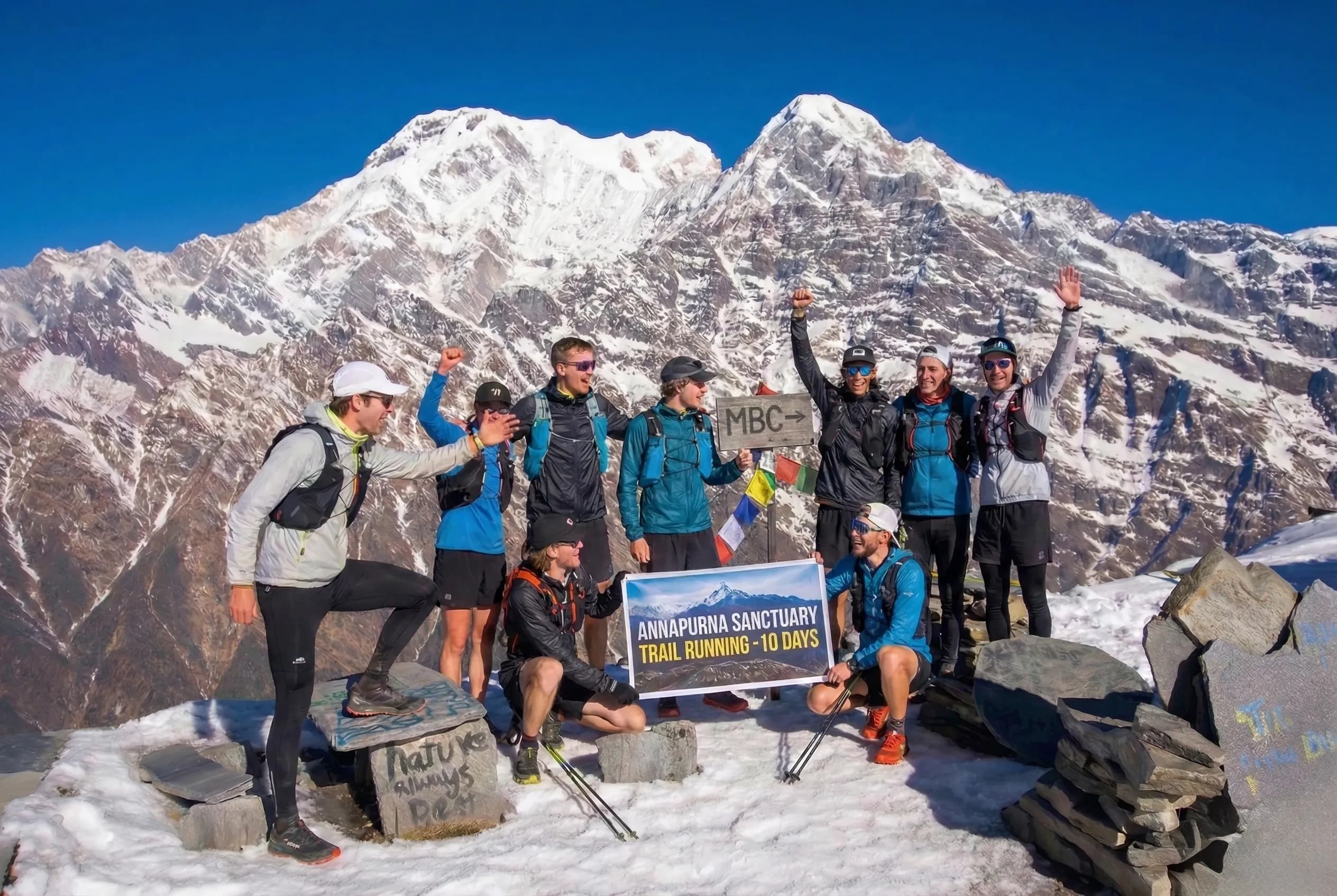
9 Nights 10 Days · USD 950

Langtang Region

Hotel & Teahouse

Forest & Mountain Trail

Spring & Autumn

Moderate

6 Nights 7 Days

5-6 hours

ere
Langtang Valley is a 7-day trail running camp that takes you from the subtropical gorges of Syabrubesi (1,460 m) to the glacial high country of Kyanjin Gompa (3,870 m), finishing with a summit push to Tsergo Ri at 4,950 m. The total distance covers roughly 95 to 120 km with 5,500 to 7,500 m of cumulative elevation gain, depending on objectives chosen at altitude.
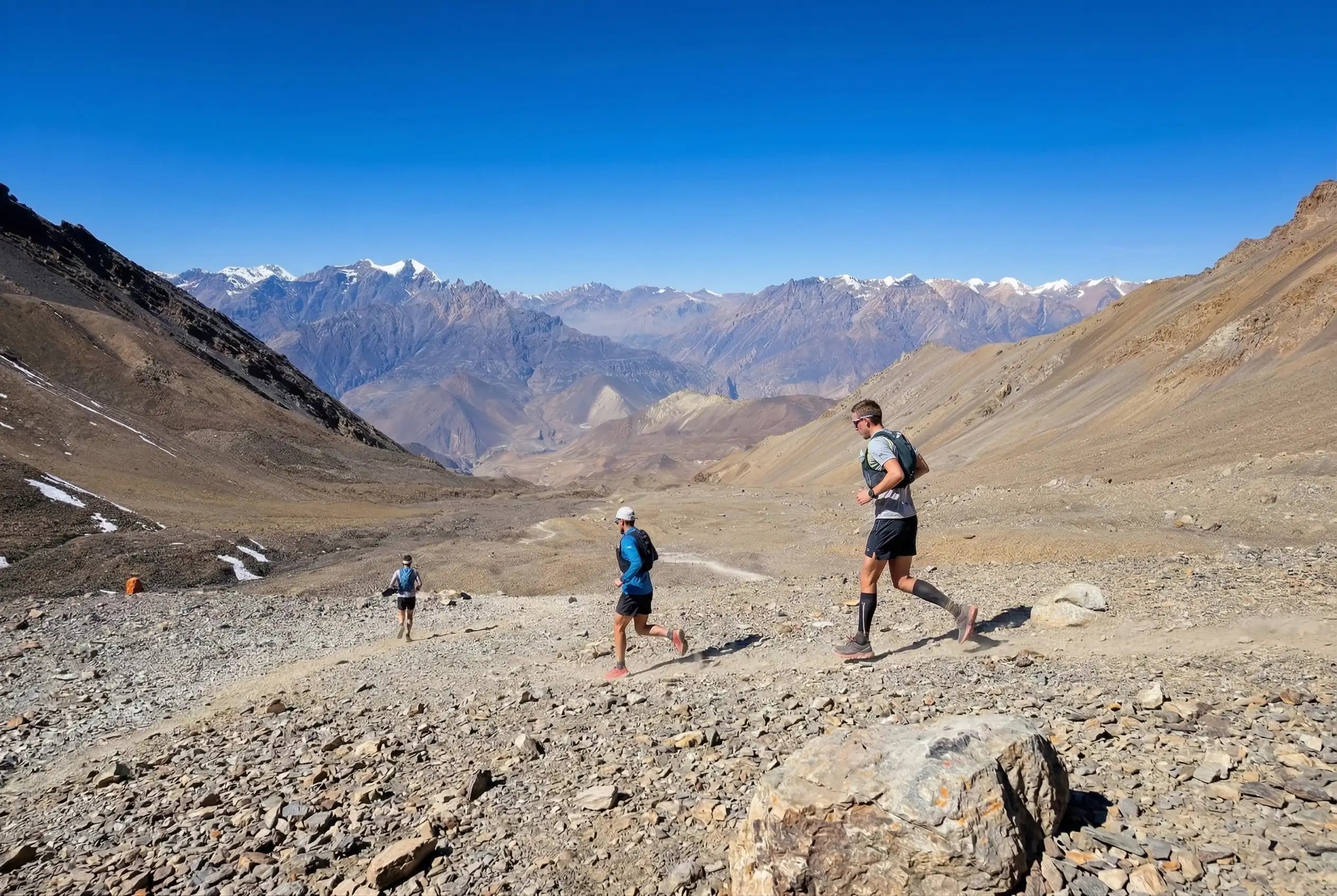
The route follows the Langtang Khola upstream through four distinct terrain zones: dense subtropical forest with waterfalls and langur monkeys, rhododendron and pine ridges, wide-open glacial valley, and high-altitude moraine terrain. You run past ancient Tamang villages, cross prayer-flag suspension bridges, and pass through a community rebuilt after the 2015 earthquake with quiet determination.
This camp suits mixed-level groups. Runners tackling their first multi-day Himalayan camp will find manageable daily distances with guide-adjusted pacing. Experienced athletes chasing vertical get Tsergo Ri, Kyanjin Ri, and a 25 km descent day to push hard on. Gregory’s ITRA-level coaching and Man Kumar’s local guiding make this one of the most complete trail running experiences in Nepal.
Explore all our trail running camps in Nepal to find the right region for your level.
You stay in teahouses and lodges throughout the camp. These are family-run guesthouses operated by Tamang and Sherpa communities along the trail. Rooms are twin-share with beds, mattresses, pillows, and blankets. Attached bathrooms are available at lower altitude stops. At Kyanjin Gompa, facilities are more basic but functional.
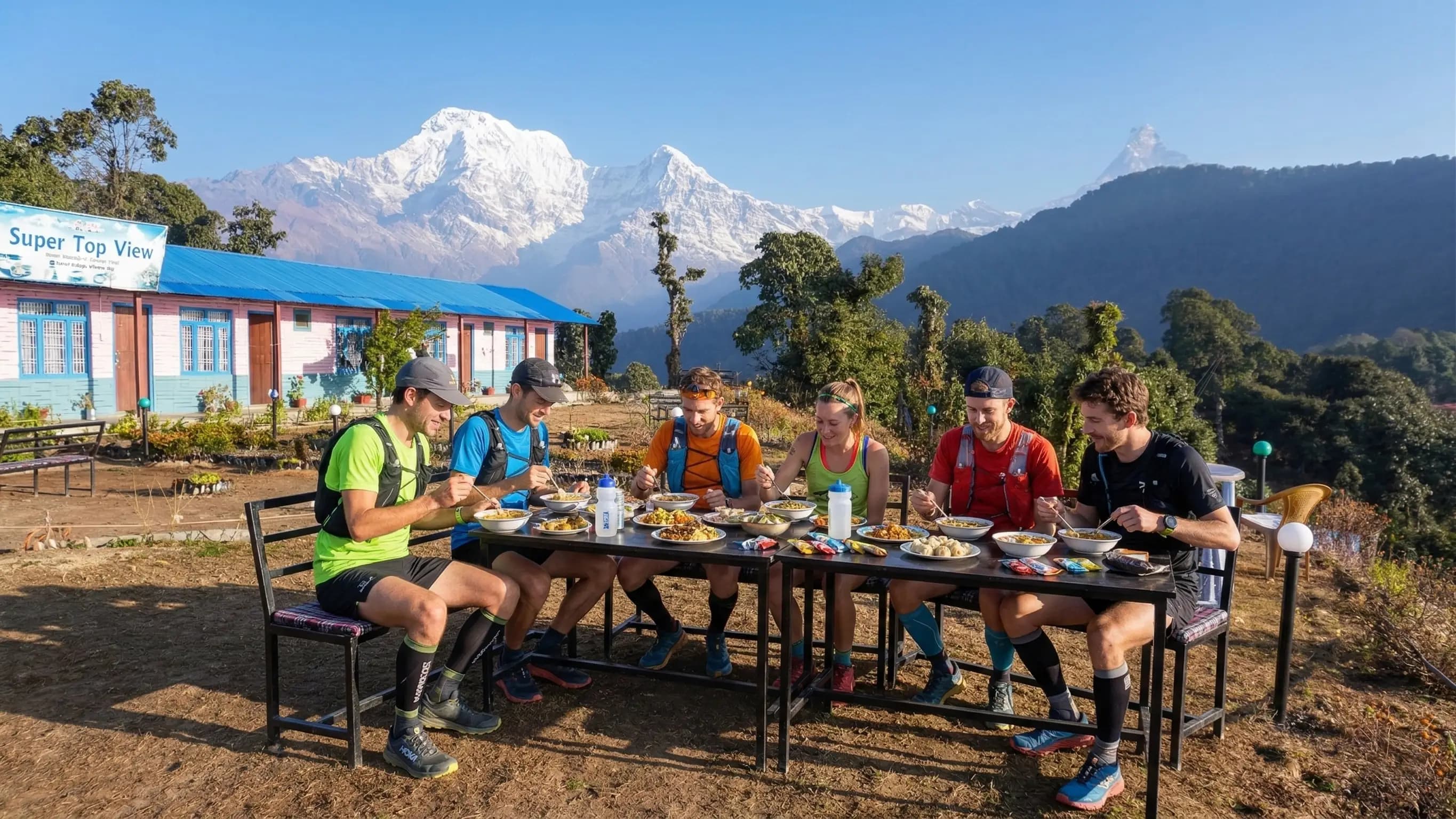
Food is served in communal dining halls, usually heated by a central wood stove. Dal bhat (rice, lentil soup, vegetable curry, pickles) is the standard trekker fuel and comes with unlimited refills. Menus also include Tibetan bread, momos, thukpa noodle soup, pancakes, pasta, and eggs. At Kyanjin Gompa, try the locally made yak cheese from the village’s famous Swiss-style cheese factory, operating since the 1950s.
Vegetarian and vegan options are available at every stop. Above 3,500 m, we recommend avoiding meat dishes, as refrigeration becomes unreliable. Hot drinks (masala tea, ginger lemon honey, black coffee) are available everywhere. Carry a reusable water bottle and use purification tablets or boiled water from teahouses.
See our complete Nepal trail running packing list for gear and nutrition advice.
Two permits are required for the Langtang Valley trail running camp: the Langtang National Park Entry Permit and the TIMS (Trekkers’ Information Management System) card. Both are arranged by Nepal Trail Running before the trip starts. You do not need to visit any government offices or queue for paperwork.
The Langtang National Park permit is checked at the entrance near Dhunche and again near Lama Hotel. Your guide carries copies and handles all checkpoint interactions. Tsergo Ri requires no separate climbing permit as it is classified as a non-technical trekking peak.
You will need a valid passport (minimum 6 months validity) and a Nepal tourist visa. Visas are available on arrival at Tribhuvan International Airport in Kathmandu. Travel insurance with emergency helicopter evacuation coverage is mandatory for this camp. Nepal Trail Running verifies your insurance details before departure.
October to December is the primary season. Skies are clear, temperatures are stable at altitude, visibility on the summits is at its best, and the trails are dry. October and November are peak months with the most predictable weather. December is still viable but requires appropriate cold-weather gear for early mornings at Kyanjin Gompa.
Mid-February to April is the secondary season. Temperatures warm up gradually, and from late March onwards, rhododendron forests between Bamboo and Lama Hotel erupt in red, pink, and white blooms. April offers excellent running conditions with longer daylight hours. Occasional afternoon cloud build-up is normal but rarely disrupts running schedules.
The monsoon months (June to August) bring heavy rain, leeches on lower trails, and limited mountain visibility. January and early February can see heavy snowfall above 3,500 m, making Tsergo Ri inaccessible. We do not operate this camp during monsoon.
The Langtang Valley is home to the Tamang people, an ethnic group with deep Tibetan Buddhist roots. Their villages are marked by mani walls (long rows of stones carved with Buddhist mantras), prayer flags strung between trees and rooftops, and small monasteries where morning chanting mixes with the sound of wind. The Tamang communities speak their own language, follow the Tibetan calendar, and celebrate Lhosar (Tibetan New Year) as their most important festival.
Langtang Village was devastated by a massive landslide triggered by the 2015 earthquake. Over 200 people lost their lives. The community rebuilt on top of the debris field with extraordinary resilience. A stone memorial lists the names of those killed. Running through this section of the trail is a reminder of how close to the bone mountain life can be, and how the people here chose to stay.
Kyanjin Gompa’s monastery is one of the oldest in the valley. Runners are welcome to visit in the morning. The yak cheese factory, established with Swiss development support, produces fresh cheese that you can buy directly. Teahouse families along the entire route are welcoming and accustomed to hosting international visitors. Basic Nepali greetings (namaste, dhanyabad) go a long way.
Langtang National Park was established in 1976 as Nepal’s first Himalayan national park. It covers 1,710 square kilometres across Rasuwa, Nuwakot, and Sindhupalchok districts. The park’s altitude ranges from 1,000 m to 7,245 m (Langtang Lirung), creating ecosystems that shift from subtropical forest to alpine meadow to glacial moraine within a single running day.
The park is one of Nepal’s most important red panda habitats and the country’s first designated snow leopard conservation area. You are unlikely to spot either on the main trail, but the biodiversity is visible everywhere: langur monkeys crashing through the canopy near Bamboo, Himalayan tahr on the high ridges, musk deer in the forest above Lama Hotel, and over 250 species of birds, including the Himalayan monal (Nepal’s national bird).
The vegetation changes dramatically with altitude. Below 2,500 m, the trail cuts through dense oak, maple, and bamboo forest. Between 2,500 and 3,500 m, rhododendron and blue pine dominate. Above Kyanjin Gompa, the landscape opens into alpine scrub, glacial moraines, and bare rock. In spring, the rhododendron belt between Bamboo and Ghodatabela is one of the most spectacular running corridors in Nepal.
Calculated for a group of 8 runners. Staff numbers adjust per confirmed group size.
| Role | Number / Notes |
| Head Guide | 1 — Man Kumar (safety lead + daily programme) |
| Assistant Guide | 1 — from Jiban or Mohan’s team |
| Porters (above 3,000 m) | 8 — 1 porter per runner |
| Porters (below 3,000 m) | 4 — 1 porter per 2 runners |
| Medical Kit Porter | 1 designated — first aid, altitude medication, supplemental oxygen |
Helicopter evacuation is available from the Kyanjin Gompa helipad. The head guide carries a satellite communicator at all times. Emergency contacts in Kathmandu are maintained throughout the trip. All support staff are insured and trained in altitude emergency response.
Arrive with 8 to 10 weeks of trail-specific training. Focus on back-to-back long runs on consecutive days to simulate the camp’s daily structure. If possible, include altitude exposure above 2,500 m in your preparation. Quad and glute strength work is especially valuable for the Day 6 descent, which puts roughly 2,000 m of downhill through your legs in a single session.
Gregory provides a detailed pre-camp training plan upon booking. The plan covers weekly mileage targets, elevation gain progression, strength sessions, and altitude simulation strategies for runners who don’t have regular access to mountains.
Read Gregory’s altitude training tips for trail runners on our blog.
A 2 to 3 day extension from Syabrubesi to Gosaikunda Lake (4,380 m) via the Lauribina La pass is available as a combined programme on request. Gosaikunda is a sacred alpine lake revered in both Hindu and Buddhist traditions, surrounded by rocky peaks and visited by thousands of pilgrims during the Janai Purnima festival each August. As a trail running extension, it offers a demanding high-altitude crossing with minimal infrastructure and maximum solitude.
Contact us to customise your Langtang camp itinerary with optional extensions.
This forest & mountain trail has a moderate difficulty rating. Proper preparation and fitness are essential.
Best season for this adventure is Spring & Autumn. Weather conditions can change rapidly in the mountains.
We'll conduct a pre-trip briefing to discuss the Langtang Valley Trail Running Camp - 7 Days route, safety guidelines, equipment requirements, and what to expect during your 6 Nights 7 Days adventure.

Professional trail running guide (Man Kumar) + assistant guide
Porters per altitude-based ratios
All accommodation (teahouse / lodge, twin or shared rooms)
All meals from Day 1 dinner to Day 6 dinner
Langtang National Park permit + TIMS card
Ground transport: 4x4 jeep Kathmandu to Syabrubesi (Day 1) + bus return (Day 7)
GPX files for all daily routes
Daily briefings and evening debriefs
Emergency first aid kit + altitude medication
International flights to/from Kathmandu
Nepal visa fees
Travel insurance (mandatory — must include emergency helicopter rescue)
Personal trail running gear and equipment
Personal expenses and tips for staff
Meals or drinks outside the programe
Optional extensions
The main concept of fastpacking is to carry lighter bag will help you travel further distance in lesser time. Fastpacking gears helps trekkers to run and walk cover multiple days. By fitting all necessary supplies into a lightweight backpack, you can travel faster and cover greater distances, enabling you to explore more without needing to return to a fixed base each night.
